Planning Appeals in Watford
A compact, urban borough with an up-to-date Local Plan
Watford is unlike the rest of Hertfordshire. It is largely built up, with Green Belt on only about a fifth of its area, its Local Plan was adopted in October 2022, and the council reports a five-year housing land supply. Refusals here are about design quality, living conditions, height and parking, not about whether development should happen at all. Cedar Planning, led by Dan Malloy MRTPI, tests those judgements on appeal.
We take on appeals across Hertfordshire, including flats, conversions, extensions and changes of use in Watford, and quote each one as a fixed fee.
- RTPI Chartered
- Fixed-fee quotations
- Direct advice from a Chartered Planner
The policy picture behind Watford decisions
The Watford Local Plan 2021-2038 was adopted in October 2022 and is the newest full plan in south-west Hertfordshire. It directs most growth to a Core Development Area covering the town centre, the Watford Junction area and the Colne Valley, and it sets base building heights for different parts of the borough.
Because the plan is recent, its policies carry full weight at appeal. The council's published statement gives a housing land supply of 5.44 years for the period April 2024 to March 2029, so the tilted balance that helps appellants in neighbouring districts does not normally apply here.
That makes the detail decisive. Refusals rely on the design policies in Chapter 6, the standards for new homes and outdoor amenity space in Chapter 3, and the plan's car parking and cycle standards. The council's Residential Design Guide is also used for extensions and infill.
Refused for a taller building?
Policy QD6.5 sets base heights and requires schemes that exceed them to show clear public benefits and high design quality. Where a refusal turns on height, we look at how the base height was applied to your site and what the townscape evidence shows.
Typical refusal reasons in Watford
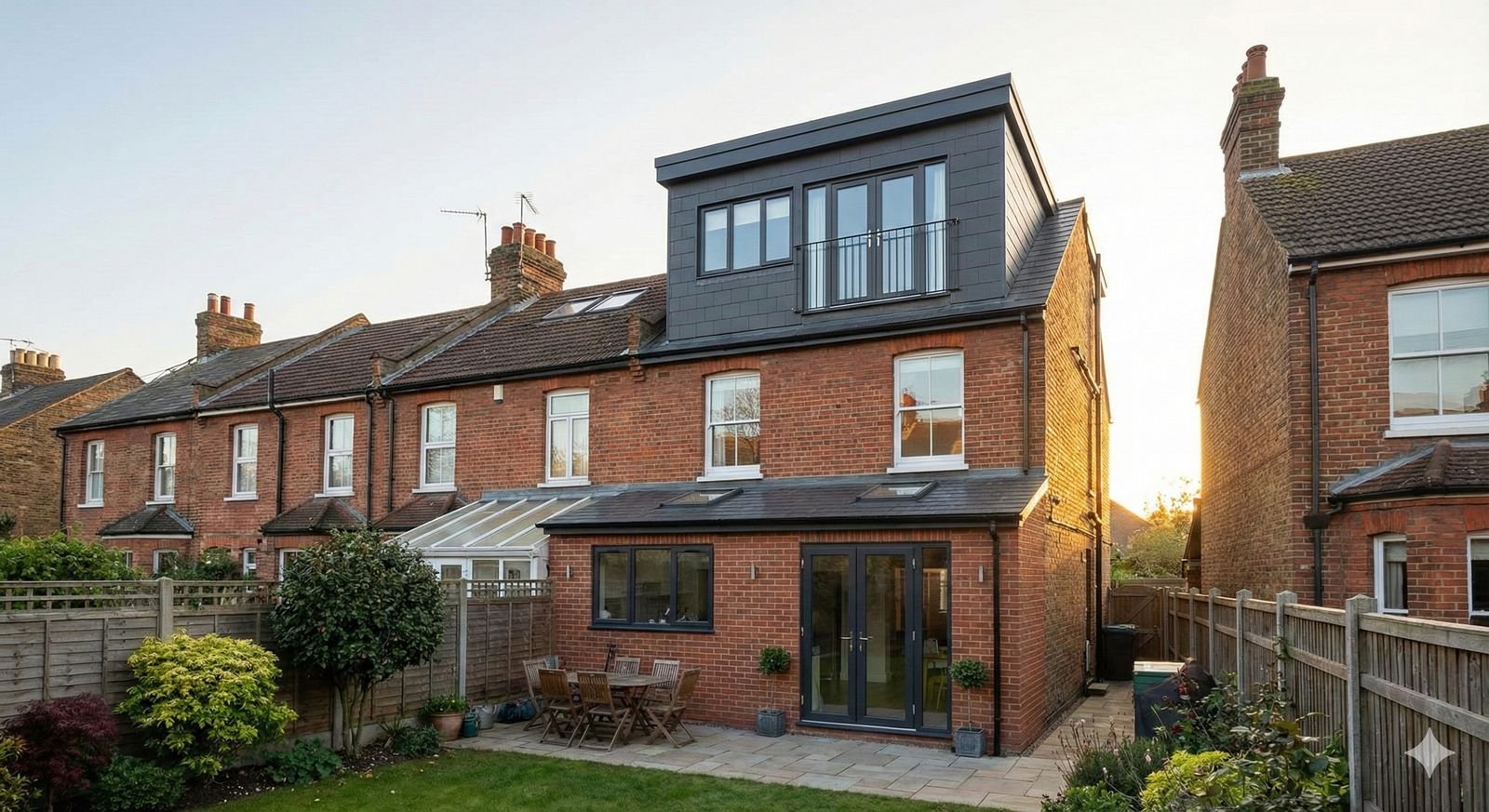
QD6.2 and QD6.4 expect development to respond to local character. Infill flats, roof extensions and side extensions are refused where scale, form or materials are judged out of keeping.
HO3.9 covers the conversion of houses into flats, and HO3.10 and HO3.11 set standards for new homes and for private and shared amenity space. Flat conversions and small new homes are often refused on these grounds.
Schemes above the base building height for their area face close scrutiny under QD6.5, particularly outside the Core Development Area.
Car-lite schemes are supported in accessible locations, but refusals follow where parking stress, cycle storage, bins or servicing are not resolved.
How a planning appeal against Watford Borough Council works
An appeal is a fresh assessment by an independent Inspector. We manage it in four steps.
Assessing the refusal
We read the officer report with the decision notice. Watford reports usually accept the principle of development, so we isolate the specific design, amenity or parking point that led to refusal.
Picking the procedure
Householder schemes use the householder appeal service. Flats, conversions and commercial schemes normally go by written representations. Larger or taller schemes may warrant a hearing, which the Inspectorate decides.
Writing the statement
We address each reason against the 2022 plan and show how the scheme meets the relevant standard. Evidence can include space standard schedules, daylight studies, townscape views or parking surveys.
Visit and decision
After a site visit the Inspector issues a written decision. Timescales depend on the Inspectorate, so we give a realistic range and explain the result when it arrives.
Making the case against Watford's policies
With an up-to-date plan and a reported five-year supply, a Watford appeal cannot rely on the plan being out of date. It has to show that the scheme complies with the policy, or that the council applied the policy too rigidly.
Many design and amenity refusals are matters of judgement. An Inspector visiting the street may take a different view on whether a roof extension is harmful or whether a flat has adequate outlook. Clear drawings and measured evidence make the difference.
Office and shop conversions are a separate route. Article 4 Directions confirmed in November 2023 remove Class MA rights at the Clarendon Road office location and six industrial estates, so we check whether a prior approval or a full application was the correct route before appealing.
Key policy areas we navigate
We check each unit against the plan's standards. Our minimum space standards calculator gives a first view.
Converting a house into flats raises amenity, parking and mix issues. See our guide to converting a house into flats.
Refused Class MA prior approvals are tested only against the permitted development conditions. See our guide to Class MA conversions.
Conservation areas such as Nascot and listed buildings in the town centre need a clear heritage statement.
A Consultancy That Works With You, For You
Watford officers generally support development, so a refusal usually means a specific standard was not met or a design judgement went against the scheme. That makes many cases suitable for a revised application.
Where the council's judgement is open to challenge, an appeal is worthwhile. We tell you which applies before you commit to either route.
RTPI Chartered
Led by a Chartered member of the Royal Town Planning Institute with more than ten years of public and private-sector planning experience.
Honest Prospects
A realistic view of the planning risks and options before you commit time or money.
Fixed, Transparent Fees
Fixed-fee quotations agreed before work starts, so you know the cost from the outset.
Direct Access
You deal with the Chartered Planner doing the work, not an account manager.
Planning Appeals Across Hertfordshire
We cover every council area in Hertfordshire. See our main Hertfordshire planning appeals page. Looking for help before or instead of an appeal? See our Watford planning consultant page.
Watford Planning Appeal FAQs
Can I rely on housing land supply in a Watford appeal?
Not usually. The council's published statement gives 5.44 years for April 2024 to March 2029, and the Local Plan is less than five years old. The case has to be made on compliance with the plan and the planning merits.
My flat conversion was refused on amenity grounds. Is it worth appealing?
It depends on how far the scheme falls short. A marginal shortfall in outlook or amenity space can succeed at appeal. A clear failure against the space standards is better fixed in a revised scheme.
Can I appeal a refusal based on building height?
Yes. Policy QD6.5 allows buildings above the base height where the tests are met. The appeal needs townscape evidence and a clear account of the public benefits.
How long do I have to appeal a refused extension in Watford?
Twelve weeks from the decision date for a householder application. See our page on householder planning appeals.
Is a revised application better than an appeal?
Often, where the objection is to one measurable standard. Where it is a design judgement you disagree with, an appeal may be the better route. Our guide on what to do after a refusal compares them.
Request a Free Appeal Review
Send us the Watford decision notice, the refused plans and the site address. We will tell you honestly whether an appeal has a realistic prospect of success and give you a fixed-fee quote.
Or email us at info@cedarplanning.co.uk with the relevant information.
Send us a Watford decision notice for review, or book a free 15-minute call. Our appeal process guide explains each stage.