Planning Appeals in East Herts
Market towns, Green Belt and the rural area beyond it
East Herts is the largest district in Hertfordshire. The south is Green Belt, the north is countryside with its own restrictive policy, and five market towns sit between them. East Herts District Council's refusals usually turn on which of those areas a site falls in. Cedar Planning, led by Dan Malloy MRTPI, tests each refusal against the District Plan.
We take on appeals across Hertfordshire, from Hertford and Ware to Buntingford and the villages, and quote each one as a fixed fee.
- RTPI Chartered
- Fixed-fee quotations
- Direct advice from a Chartered Planner
The policy picture behind East Herts decisions
The East Herts District Plan was adopted in October 2018. Policy GBR1 covers the Green Belt and GBR2 the Rural Area Beyond the Green Belt, which takes in most of the district north of Ware. Policies VILL1 to VILL3 sort the villages into three groups with different scope for new homes, and DES4 sets the design tests.
The plan passed its fifth anniversary in October 2023, so housing supply is measured against the national standard method. The council's own guidance, published in April 2026, estimates its supply at between 3.4 and 3.7 years. For schemes that add homes the tilted balance applies unless Green Belt, heritage or habitats policies give a clear reason to refuse.
A new Local Plan is being prepared under the reformed plan-making system. A scoping consultation closed in July 2026 and the next stage is expected in early 2027. Many towns and parishes also have made neighbourhood plans that form part of the development plan.
Village plot refused as being in the wrong place?
GBR2 and the VILL policies were written to restrain housing in the countryside, but with supply below five years their weight is reduced. Small schemes on the edge of Group 1 and Group 2 villages can be stronger at appeal than the refusal notice suggests.
Typical refusal reasons in East Herts
GBR2 and VILL1 to VILL3 are cited for new homes outside village boundaries or in Group 3 villages, where only limited infill is supported.
GBR1 applies around Hertford, Ware, Sawbridgeworth and Bishop's Stortford. Extensions, replacement dwellings and new buildings are refused where they are judged inappropriate.
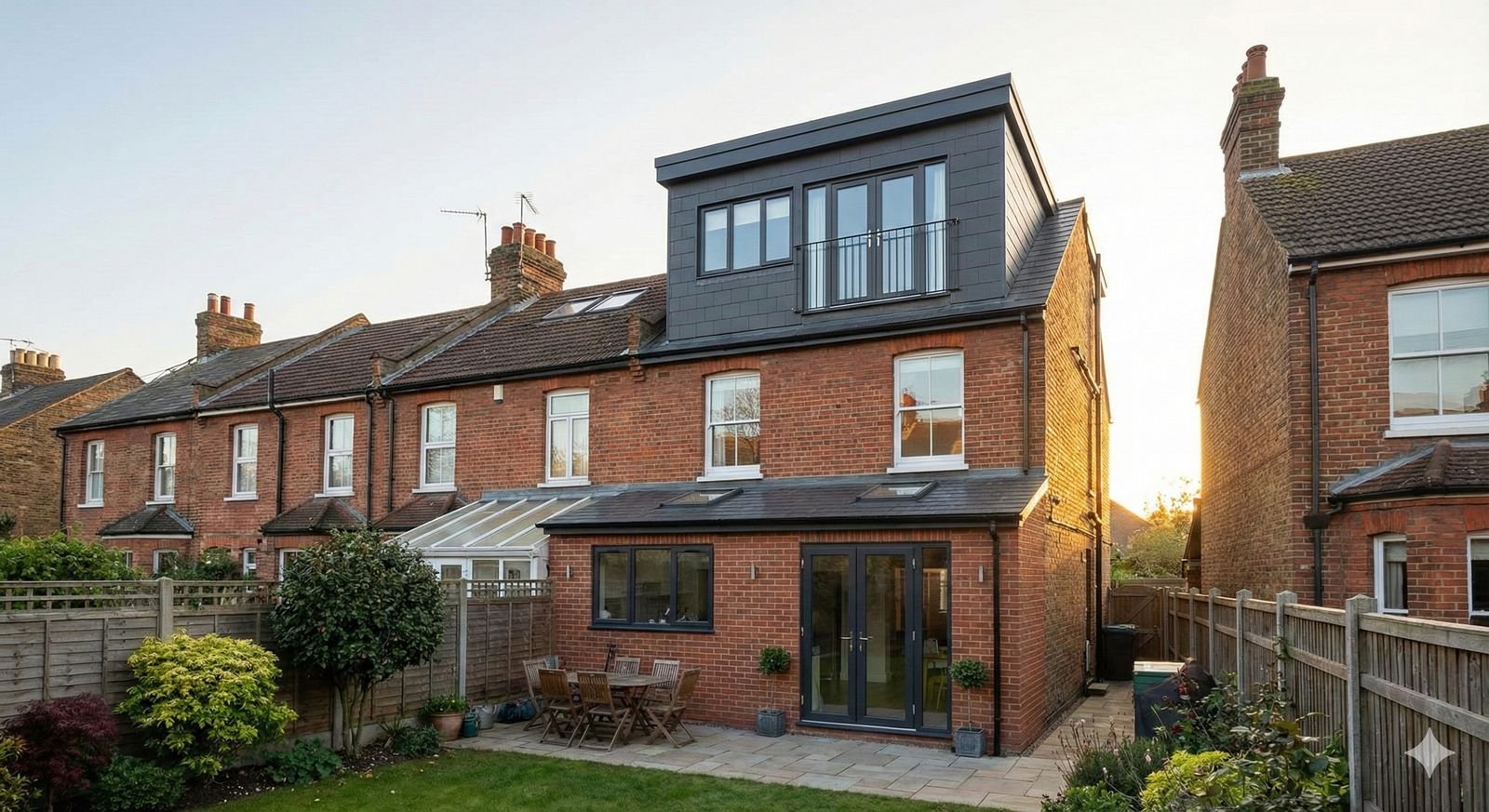
DES4 and HOU11 cover the scale, form and siting of extensions and outbuildings. HOU11 expects them to be subservient to the original house.
The HA policies protect listed buildings and the conservation areas in Hertford, Ware, Bishop's Stortford and many villages.
How a planning appeal against East Herts District Council works
A Planning Inspector looks at the scheme afresh. We take the appeal through four stages.
Reviewing the refusal
We read the decision notice with the officer report and any neighbourhood plan. The first task is to confirm which policy area and village group the council placed the site in.
Procedure
Householder refusals use the householder appeal service. Single plots and small schemes go by written representations. Larger housing schemes where supply is disputed may be heard, as the Inspectorate directs.
Statement of case
We address each reason, set out the housing supply position and its effect on policy weight, and explain the planning balance. Evidence may cover accessibility, landscape, heritage or Green Belt purposes.
Site visit and decision
The Inspector visits and issues a written decision. We give an honest view on timing and explain what the outcome means for the site.
Making the case against East Herts' policies
With supply estimated at 3.4 to 3.7 years, the policies that restrict where housing can go are treated as out of date for decision making. The Inspector must then ask whether the harm significantly and demonstrably outweighs the benefits.
That does not help every site. Green Belt land still has to pass the national tests, including whether it is grey belt, and heritage harm is weighed separately.
For householder schemes HOU11 is the key policy. We compare the proposal with the original dwelling and with the permitted development fallback.
Key policy areas we navigate
We check the village's group, its boundary and any neighbourhood plan allocation before advising on a housing appeal.
Refused conversions may be appealed as full applications or as Class Q prior approvals.
HOU11 and the annexe policy decide many domestic cases. See our annexe planning page.
See our East Herts Call for Sites page for land with longer-term potential.
A Consultancy That Works With You, For You
East Herts refusals in the countryside often rest on policies whose weight has changed since they were written. An appeal that explains this clearly can succeed where a second application would not.
Where the refusal concerns design or heritage, we tell you whether the objection can be answered by evidence or needs a different scheme.
RTPI Chartered
Led by a Chartered member of the Royal Town Planning Institute with more than ten years of public and private-sector planning experience.
Honest Prospects
A realistic view of the planning risks and options before you commit time or money.
Fixed, Transparent Fees
Fixed-fee quotations agreed before work starts, so you know the cost from the outset.
Direct Access
You deal with the Chartered Planner doing the work, not an account manager.
Planning Appeals Across Hertfordshire
We cover every council area in Hertfordshire. See our main Hertfordshire planning appeals page. Looking for help before or instead of an appeal? See our East Herts planning consultant page.
East Herts Planning Appeal FAQs
Does East Herts have a five-year housing land supply?
The council's April 2026 guidance estimates supply at between 3.4 and 3.7 years. For schemes that add homes this engages the tilted balance, subject to Green Belt, heritage and habitats policies.
Can I appeal a refused house on the edge of a village?
Yes. The case depends on the village's group, access to services, landscape impact and the supply position. We assess the site before recommending an appeal.
Can I appeal a refused extension under Policy HOU11?
Yes, within 12 weeks for a householder application. The argument is usually about scale relative to the original house. See our page on householder planning appeals.
Does a neighbourhood plan affect my appeal?
Yes. A made neighbourhood plan is part of the development plan. Where it allocates housing sites and is recent, it can carry significant weight even when district supply is short.
Should I appeal or reapply?
If one design point caused the refusal, reapply. If the council objects to the location or principle, appeal. Our guide on what to do after a refusal explains both.
Request a Free Appeal Review
Send us the East Herts decision notice, the refused plans and the site address. We will tell you honestly whether an appeal has a realistic prospect of success and give you a fixed-fee quote.
Or email us at info@cedarplanning.co.uk with the relevant information.
Send us an East Herts decision notice for review, or book a free 15-minute call. Our appeal process guide explains each stage.