The challenge
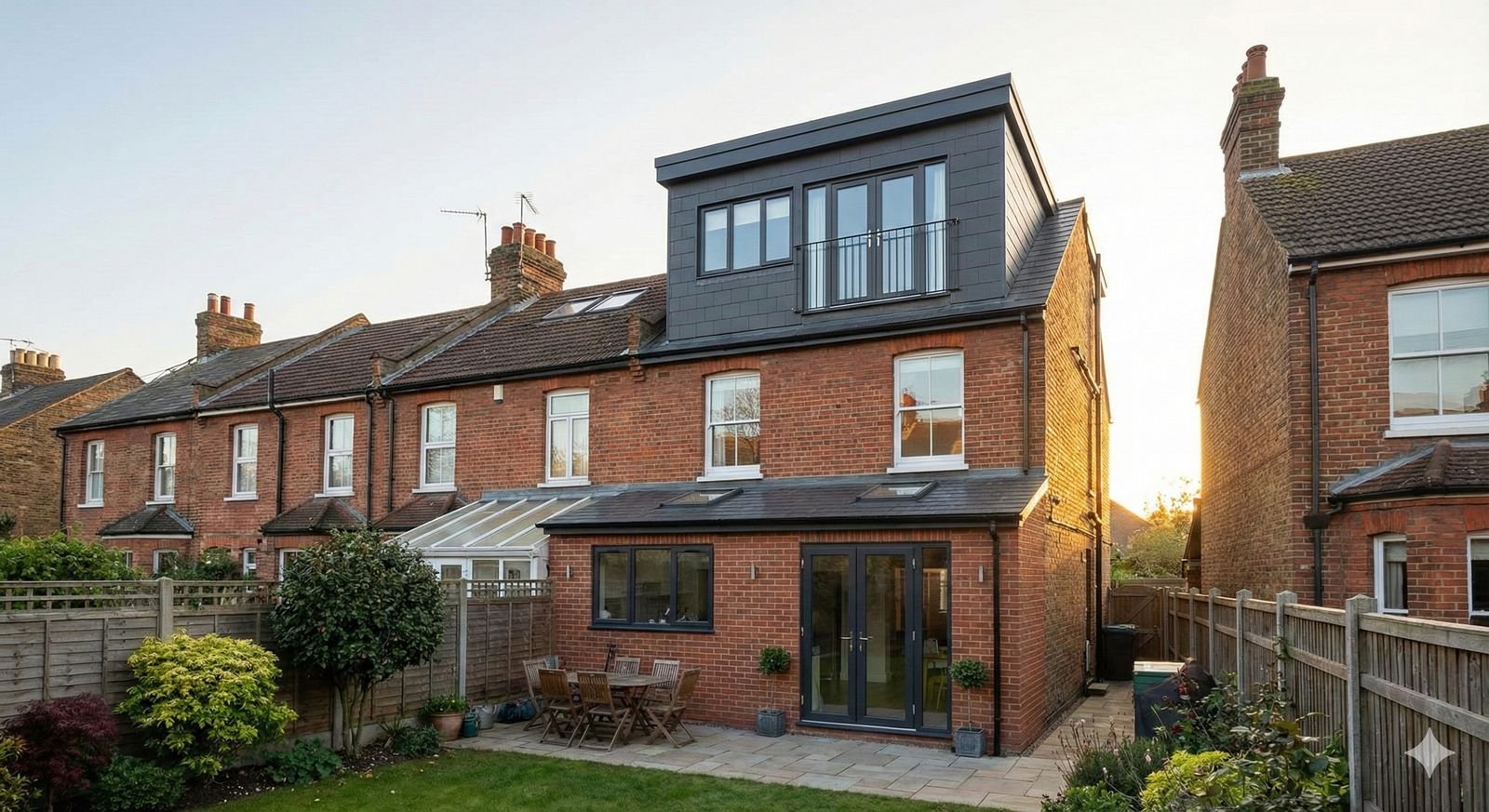
Cedar Planning was instructed following the refusal of planning permission for a loft conversion involving a hip-to-gable roof extension and large rear dormer.
The Council considered that the proposal would harm the character and appearance of the surrounding area and refused planning permission accordingly. The key issue in dispute related to whether the roof alterations would appear visually harmful within the surrounding street scene. Councils frequently resist large dormers and roof enlargements where they consider that the proposal would dominate the original roof form or appear out of keeping with neighbouring properties.
However, planning decisions must be made within the context of the wider area rather than in isolation. Following a detailed review of the site, planning history and surrounding street scene, it became clear that similar forms of development had already become commonplace nearby, and we advised that there were strong grounds to challenge the refusal through the planning appeal process.
Existing loft conversions
A significant number of nearby properties had already undertaken loft conversions, rear dormers and roof alterations.
Neighbouring development
The attached neighbouring property had implemented a comparable form of development under Permitted Development Rights.
Street scene character
The wider character of the area had already evolved through incremental residential extensions and alterations.
Fallback position
A realistic fallback position existed through Permitted Development Rights and previous planning permissions.
Our approach
The appeal statement prepared by Cedar Planning focused heavily on the surrounding context of development and the importance of consistency in planning decision-making.
Rather than assessing the proposal against an idealised version of the original property, the appeal demonstrated that similar forms of development had become an established feature within the locality. The statement also identified a strong fallback position, which reduced the degree of alleged planning harm and strengthened the overall planning balance in favour of the proposal.
Consistency in planning decision-making
While every planning application must be assessed on its own merits, Inspectors will frequently consider whether similar nearby development has already been accepted either through planning permission or Permitted Development Rights. The appeal also referred to a nearby appeal decision involving a comparable scheme. Although appeal decisions are not strictly binding precedent, they can still carry persuasive weight where the planning circumstances are materially similar.
Key point
Fallback positions and comparable neighbouring development can carry substantial weight in loft extension appeals, particularly where similar alterations are already prevalent nearby.
The result
The Planning Inspector accepted that the proposal would not appear materially harmful within the wider context of the surrounding area. The planning appeal was allowed and planning permission was granted for the loft extension and rear dormer.
Alongside the successful appeal, retrospective planning permission was also secured for single-storey side and rear extensions at the property, providing the client with certainty over the wider residential development.
This case demonstrated that planning refusals are not always the final outcome and that carefully prepared appeal statements can often overturn decisions where the Council's assessment is overly restrictive or inconsistent with the surrounding context.
What this means for your project
Loft extensions are one of the most common forms of householder development, yet Councils frequently adopt restrictive positions regarding rear dormers, roof enlargements and hip-to-gable alterations. Appeal decisions often take a more balanced approach where:
- Similar development exists nearby. Comparable roof alterations in the surrounding area can significantly strengthen the planning case.
- The street scene has evolved. Incremental residential extensions may already have altered the original character of the area.
- A fallback position exists. Permitted Development Rights or earlier permissions can reduce the level of alleged planning harm.
- The appeal statement is robust. A clear, policy-led and evidence-based appeal statement can materially improve appeal prospects.
Cedar Planning regularly assists homeowners with planning appeals, planning condition appeals, refused planning applications and general planning advice.
Frequently asked questions
Can I appeal a loft extension refusal?
Yes. Many loft extension refusals can be appealed, particularly where similar nearby development exists or where the Council's assessment is considered overly restrictive.
Do nearby dormers help a planning appeal?
They can. Existing nearby dormers, roof enlargements and loft conversions may help demonstrate that the proposal would not appear out of character within the surrounding area.
What is a fallback position in planning?
A fallback position refers to alternative development that could realistically occur, often through Permitted Development Rights or previous planning permissions. This can sometimes carry significant appeal weight.
Can retrospective planning permission still be approved?
Yes. Retrospective applications are assessed on their planning merits in the same way as standard planning applications.
“Dan was attentive throughout and turned things round in no time. He was open to my drafting suggestions and kept us up to date throughout, including proactively chasing Birmingham for updates. The appeal he put together was comprehensive, well laid out and professional. And it did the trick, with our appeal being accepted!”

Dan Malloy MRTPIDirector and Chartered Town Planner at Cedar Planning, with more than ten years of public and private-sector planning experience. About Cedar Planning