The challenge
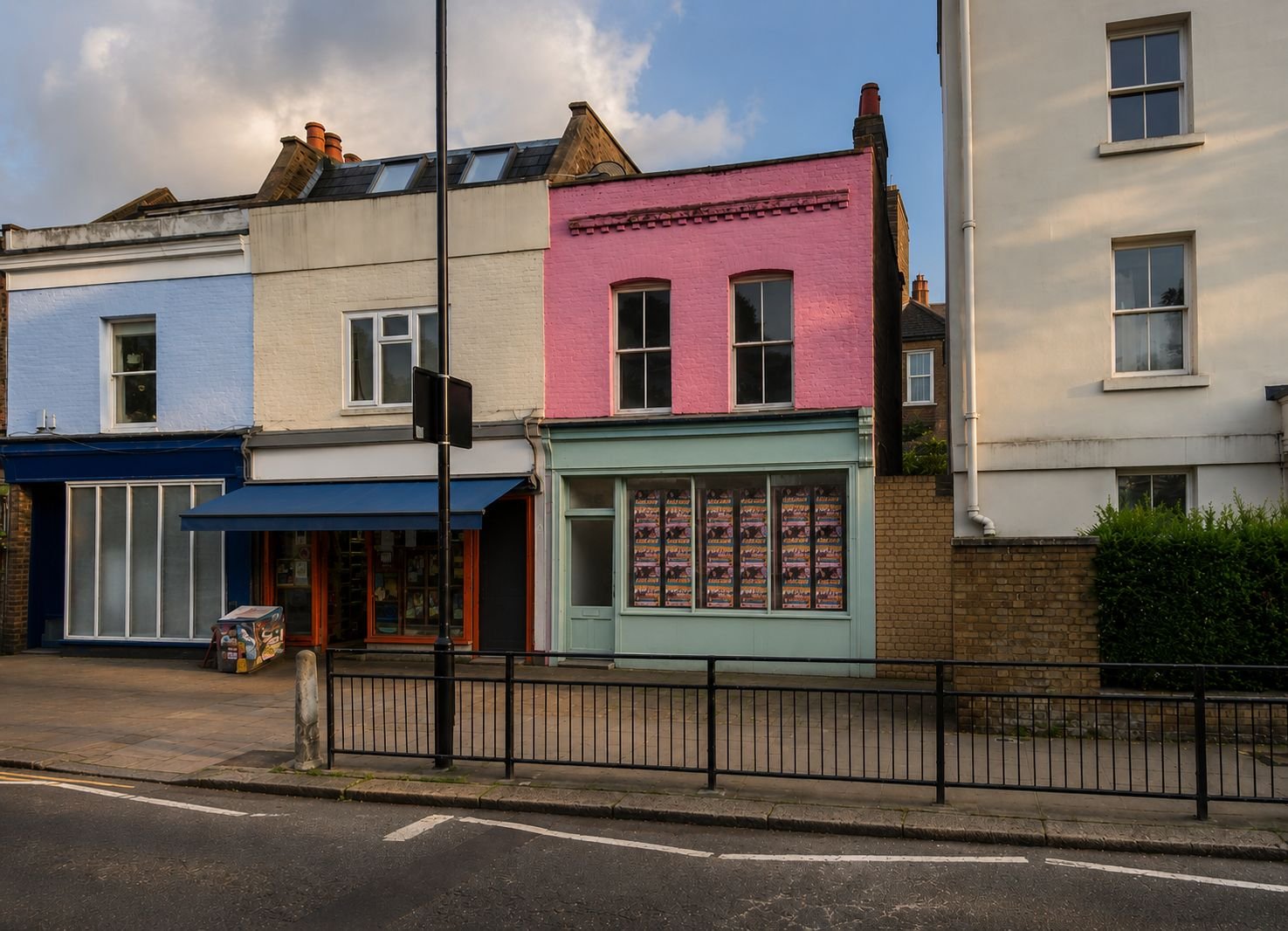
Vacant shops and commercial premises can often provide an opportunity for new homes. However, these projects need to be approached carefully.
Many Councils have policies which seek to resist the loss of commercial premises, unless there is robust evidence to demonstrate that there is no commercial or community demand for the site. This often includes a marketing period of anywhere between 12 and 36 months.
In dense London locations, the details matter too. Residential amenity, daylight, outlook, privacy, refuse storage, cycle parking, internal layouts, external appearance and roof form can all affect the outcome. A strong planning strategy needs to anticipate these issues before submission.
Our approach
Rather than going straight in with a single ambitious planning application, Cedar Planning advised on a staged strategy designed to secure the principle of residential use first through a Class MA Prior Approval application, then pursue the maximum value of the site through a later planning application.
- Secure the residential fallback. A Class MA prior approval application was submitted to secure the principle of changing the vacant shop to two residential flats. This was assessed against the relevant technical requirements, avoiding the need to justify the loss of the commercial premises.
- Use the permission to strengthen the position. Once the principle of residential use had been secured, the site had a much stronger planning fallback position. A follow-up application for the extensions did not need to justify the loss of the commercial space, as this had already been established.
- Submit the mansard roof extension application. A full planning application was then prepared for an upward extension, helping to maximise the floorspace and value of the development.
Cedar Planning provided a robust Class MA Planning Statement setting out how the proposal complied with the relevant requirements. Whilst a single application could have approached both the change of use and the extension, the Council would then have needed to take into account its restrictive policies for such applications.
Working with the design team
Cedar Planning worked alongside the appointed design team to help drive forward the planning approach, including maximising the number of residential flats provided, which made the second application a simpler process. This included reviewing the planning risks, considering how the Class MA route could support the intended outcome, and helping the design team present the upward extension in a way that responded to the site, the surrounding context and the likely concerns of the Council.
The result
The staged approach reduced the level of risk for the client. The Class MA approval meant that the Council could not take into account the loss of the commercial space, and it created a fallback position which was used to justify the later application for extensions and alterations.
By securing the change of use first, then pursuing the upward extension, the client was able to move forward with a stronger and more commercially valuable scheme.
Key lesson
A carefully sequenced strategy can reduce risk, strengthen the planning position and help maximise development value.
What this means for your project
Given the restrictive policy position many London and national councils take on the loss of commercial premises, Class MA Prior Approval offers an attractive route for many property developments. For landowners, developers and commercial property owners, this case highlights the importance of choosing the right planning strategy from the outset. The same staged thinking applies across a number of scenarios where permitted development rights are available, from barn conversions to homeowner extensions.
If you are considering the conversion of a vacant shop, office, commercial unit or mixed-use property, a prior approval application may be the best first step. In other cases, a full planning application, lawful development certificate or combined strategy may be more appropriate. Our guide to Class MA explains the rules, and our London planning consultant page covers our work across the London Boroughs.

Dan Malloy MRTPIDirector and Chartered Town Planner at Cedar Planning, with more than ten years of public and private-sector planning experience. About Cedar Planning