
The challenge
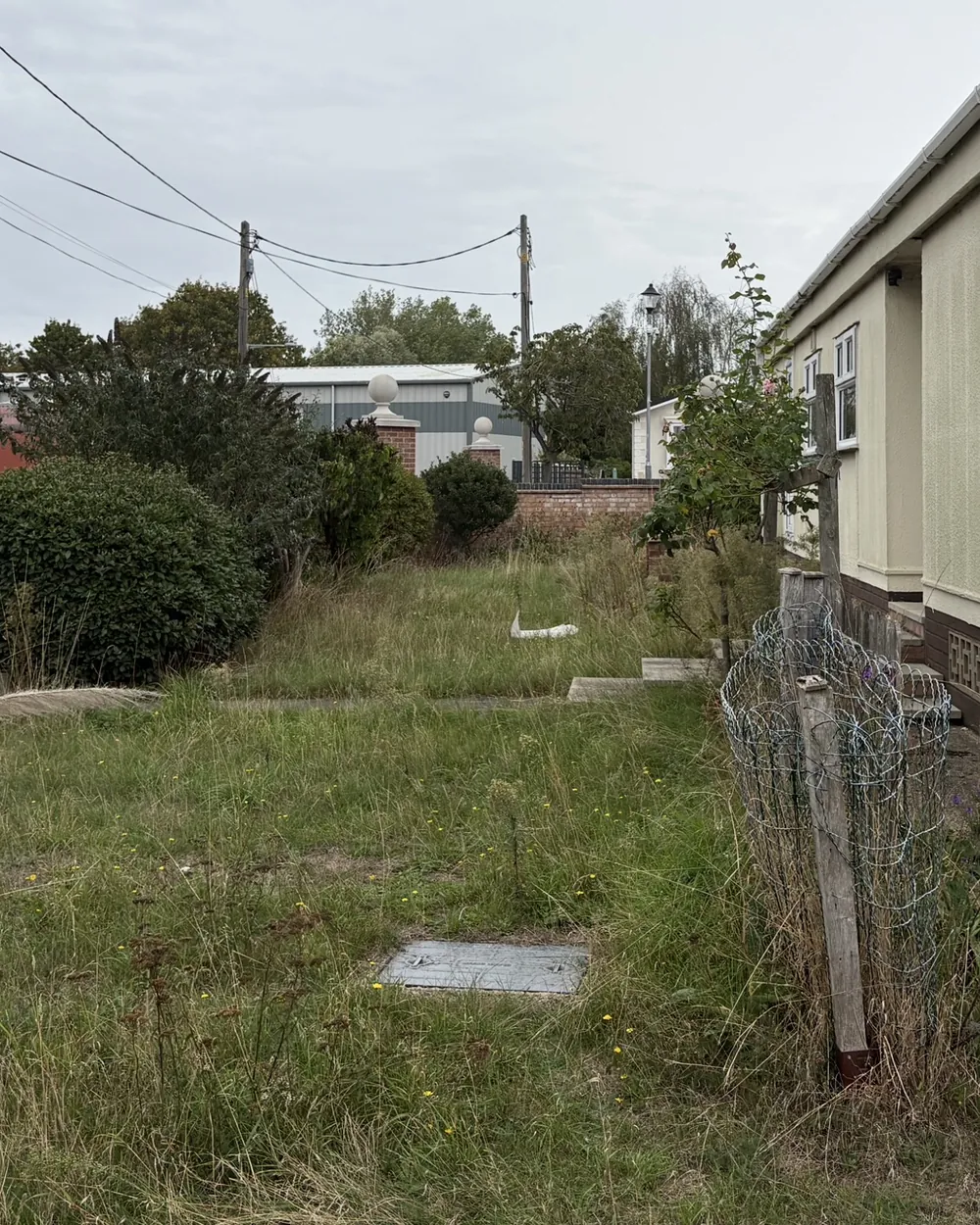
Our client owns and runs a long-established residential park home estate. One plot had an ageing park home that needed replacing and a rear garden much larger than those of the neighbouring homes.
The client wanted to remove the existing home and site two new park homes on the plot, increasing the number of homes on the park by one. The question was whether this needed a full planning application, with the cost, time and uncertainty that involves, or whether the park's existing lawful use already allowed it.
Park home sites often have long and fragmented planning histories. Before any route is chosen, the existing permissions, certificates and conditions need to be checked carefully.
Our approach
We concluded that the proposal was not "development" under the Town and Country Planning Act 1990, so planning permission was not required. To confirm this formally, Cedar Planning prepared a supporting statement and submitted an application for a Certificate of Lawfulness of Proposed Use or Development under Section 192 of the Act.
A lawful development certificate application is decided on the facts and the law, not on planning merits. The case therefore had to show two things: that siting the new homes would not involve operational development, and that it would not cause a material change in the use of the land.
Do the new homes meet the legal definition of a caravan?
Park homes fall within the statutory definition of a caravan if they meet three tests on size, construction and mobility, set out in the Caravan Sites and Control of Development Act 1960 and the Caravan Sites Act 1968. We showed that each new home would:
- be within the maximum length, width and internal height allowed by the 1968 Act;
- be made off-site in no more than two sections and delivered to the park by road; and
- sit on a steel chassis supported by jacks, with no foundations or structural fixings, so it could still be moved as a whole.
The decorative brick plinths and service connections fall within permitted development rights for caravan sites. These rights cover works required by the conditions of a site licence.
Key planning point
A park home that meets the size, construction and mobility tests is a caravan in law. Stationing it on land is not building or engineering work, so the planning question is about the use of the land, not the structure itself.
What the planning history allowed
The site's planning history was central to the case. We found that the original permission for the park, granted in 1980, allowed a larger number of caravans than are on the site today. Neither of its two conditions restricted the number of caravans that could be stationed on the land. A later Certificate of Lawfulness had also confirmed the residential caravan use without layout restrictions, and the Council had since accepted that the 1980 permission was still extant.
We relied on established case law, including I'm Your Man Ltd and Cotswold Grange Country Park LLP. These cases confirm that a number of caravans mentioned only in the description of a permission is not a legal limit. A limit needs a condition.
Would one more home be a material change of use?
Even where a permission sets no cap, adding units can in principle amount to a material change of use through intensification. Using the Court of Appeal's approach in Hertfordshire County Council v SSCLG (Metal Waste Recycling), we showed that:
- the proposal was a net increase of a single home, under 3% of the park's total;
- the plot is wholly within the established park and does not extend onto any new land;
- there would be no new access and no change to the park's enclosed, gated, residential character; and
- the park would remain well below the number of caravans described in its original permission.
We also referred to East Suffolk Council's own recent decisions. The Council had issued lawful development certificates for proportionally much larger increases at other caravan and park home sites in the district, and a recent appeal decision applied the same principles to a residential park home estate.
Site licensing is separate from planning. A Certificate of Lawfulness confirms the planning position, but the owner must still vary the caravan site licence before the new homes are sited, and the licence controls matters such as spacing and fire safety.
The result
East Suffolk Council issued the Certificate of Lawfulness, confirming that removing the existing park home and siting two new park homes would be lawful and did not need planning permission.
For our client, this avoided a full planning application, where the merits of an additional home in this location could have been debated. It gave legal certainty before they committed to buying and installing the new homes.
What park home owners and operators can learn
Many park home sites have more scope than their owners realise. The details of the original permission matter more than the number of homes currently on site. Before applying for planning permission for additional or replacement park homes, it is worth checking:
- whether the original permission or any certificate includes a condition limiting caravan numbers or layout;
- whether any number of units appears only in the description of development;
- whether the new homes will meet the legal definition of a caravan;
- whether the proposal stays within the existing site, or extends onto new land; and
- what changes will be needed to the caravan site licence.
Cedar Planning provides planning consultancy to park home owners, operators and landowners across East Suffolk, Suffolk, Norfolk and beyond. Where planning permission is needed, we also prepare planning applications.
Frequently asked questions
Do I need planning permission to add a park home to an existing site?
Not always. If the site's permissions do not limit the number of caravans by condition, the new home meets the legal definition of a caravan and the addition does not amount to a material change of use, planning permission may not be required. A Lawful Development Certificate can confirm this.
What is a Lawful Development Certificate?
It is a legally binding confirmation from the council that a use or development is lawful. A certificate for a proposed use is made under Section 192 of the Town and Country Planning Act 1990 and is decided on the facts and the law, not on planning merits.
When is a park home legally a caravan?
When it meets the size, construction and mobility tests in the Caravan Sites and Control of Development Act 1960, as amended by the Caravan Sites Act 1968. In broad terms, it must be within the maximum dimensions, built in no more than two sections, and physically capable of being moved by road once assembled.
Does a certificate mean I can site the new homes straight away?
Not necessarily. The caravan site licence is separate from planning and usually needs to be varied before additional homes are stationed. The licence controls matters such as spacing, layout and fire safety.
Can Cedar Planning review my park home site's planning history?
Yes. We review the original permissions, conditions, certificates and later decisions to advise whether a Lawful Development Certificate, a planning application or another route is the right approach.
Site location and details have been kept general at the client's request. This article is provided for general information and does not constitute site-specific planning advice.

Dan Malloy MRTPIDirector and Chartered Town Planner at Cedar Planning, with more than ten years of public and private-sector planning experience. About Cedar Planning